Why Bathing Is Woven Into the DNA of Iceland

Ask an Icelander where they go to think, to argue, to celebrate or to recover, and the answer is usually the same: the water. Not the sea — the hot water. Bathing in geothermal springs is not a spa treatment here or a holiday indulgence. It is where life happens, and it has been for as long as there have been Icelanders.
A thousand years of hot water
The first settlers arrived in the ninth century to an island of fire and ice, and they quickly learned that the fire could be useful. Steam rose from the ground; warm water pooled in the rocks. In a land without forests to burn and with winters that lasted half the year, a natural hot spring was not a luxury. It was survival, and it was comfort.
The sagas are full of it. Snorri Sturluson, the medieval chieftain and author who gave the world much of Norse mythology, built his own stone-lined pool at Reykholt in the 13th century, fed by a hot spring through a covered channel. Snorralaug still exists today — one of the oldest surviving structures in Iceland. The outlaw Grettir the Strong is said to have warmed himself in a spring on the north coast after swimming from the island of Drangey; Grettislaug, restored, still steams beside the fjord.
Even the capital carries the history in its street names. Reykjavík's main shopping street, Laugavegur, means "the pool road" — it was the path women walked to the hot springs at Laugardalur to wash the family's laundry.
From necessity to national identity
The modern chapter began in the 20th century. Reykjavík started piping geothermal water into homes in the 1930s, and today around nine in ten Icelandic houses are heated by water from the ground. It made the country one of the cleanest-heated nations on earth, and it changed daily life. If hot water is abundant and nearly free, why not fill a pool with it?
So every town did. In 1940 swimming became a compulsory school subject, and the swimming pool became the true town square of Iceland. Villages of a few hundred people have a heated outdoor pool with hot tubs — the heitir pottar, or hot pots — open year-round, snow or shine. Farmers, fishermen, teenagers and the local MP sit shoulder to shoulder in 40-degree water, and the conversation is where the real news of the town is exchanged.
Icelanders don't go to the pool to swim laps, mostly. They go to soak, to talk, and to be quiet together. It is the closest thing the country has to a shared living room.
The ritual
The rules are simple, and every Icelander learns them as a child. You shower thoroughly before you get in — at public pools that means without a swimsuit, in the communal showers, and no one thinks twice about it. It is why Icelandic pools use so little chlorine, and why the water feels the way it does.
Then you take your time. Move between the warm pool, the hotter pot and, if you are brave, the cold one. Stay as long as you like. Talk, or don't. Leave with your shoulders lower than when you arrived.
There is a saying that nothing is truly decided in Iceland until it has been discussed in the hot pot. It is only half a joke.
The wild springs of the North
The famous lagoons in the south are beautiful, but they are also busy. The North is where Iceland's bathing culture still feels like what it was: water rising from the earth, in the open, under an enormous sky.
The Mývatn region sits on one of the most active geothermal fields in the country. Steam vents at Hverir, warm caves in the lava, and the Mývatn Nature Baths — quieter and cheaper than the Blue Lagoon, with a view across the lake. A little further, the valley of Reykjadalur is named for its steam: reykur means smoke, and the farms along it have bathed in natural hot water since they were settled.
Bathing the way it was meant to be
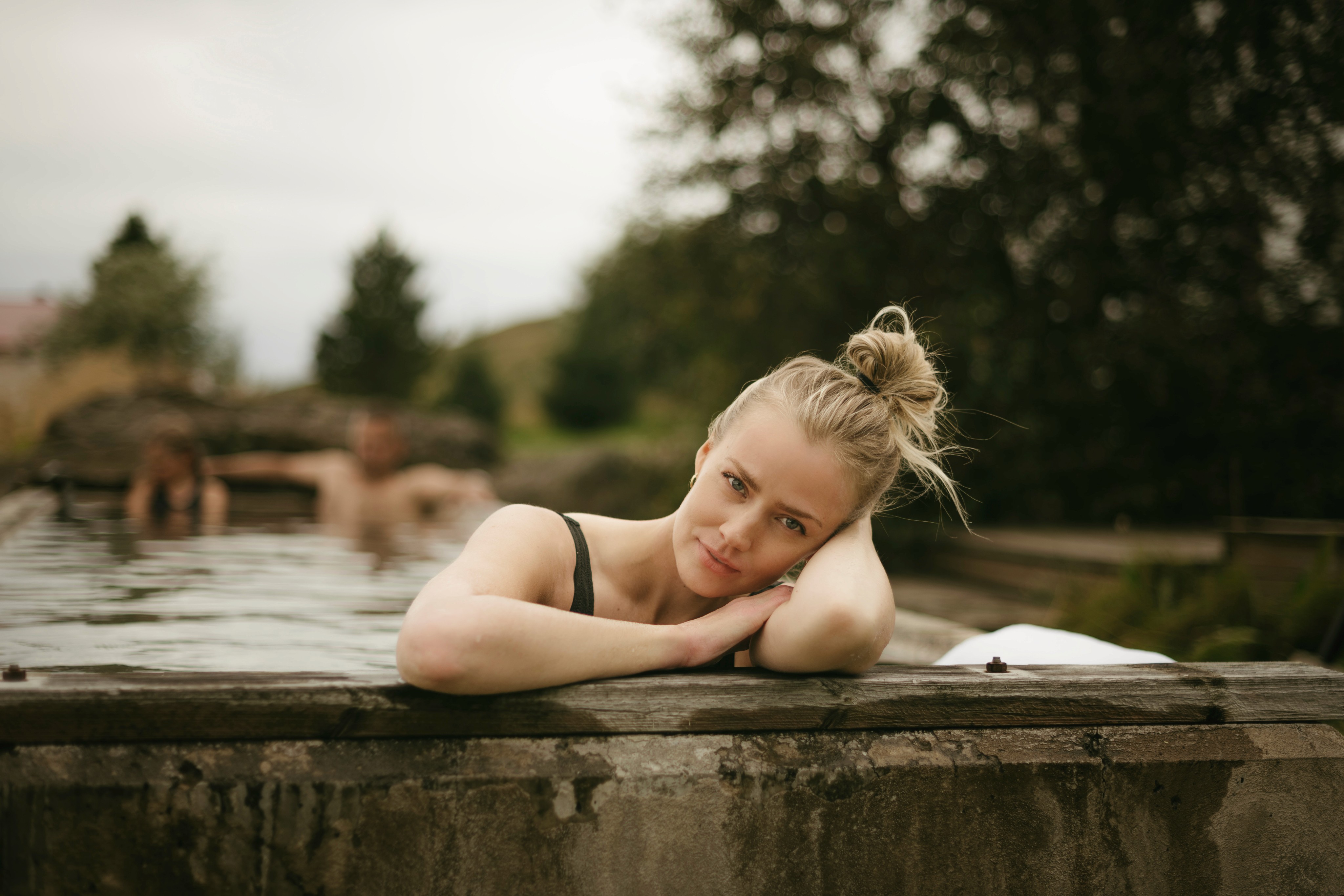
At Aurora Farm, in the heart of Reykjadalur, the hot springs are the oldest thing on the property and the last thing our guests do each night. Two natural springs, a cold plunge and a sauna sit outdoors, facing the valley, filled with water straight from the ground.
We use no chemicals in our hot springs — none. The hot water runs steadily through them and renews itself every few hours, and twice a week we empty them completely and give them a thorough scrub. What you bathe in is simply what the earth sends up: wonderful, energising water, exactly as Icelanders have enjoyed it for a thousand years.
They are reserved for hotel guests only, which means no queue, no crowd and no noise. Just the water, the valley and, on a clear autumn night, the northern lights overhead.
That is Icelandic bathing culture at its purest. Not a product, but a place — and a habit a thousand years old that we are glad to share.
Next story

Why North Iceland Is the Most Rewarding Place to Visit in Iceland
Most visitors to Iceland never make it past the south. They land in Keflavík, drive the Golden Circle, photograph the same black beach as everyone else, and fly home believing they have seen the country. They have seen a corner of it. The Iceland that people dream about — vast, quiet, wild, empty of queues — is waiting a few hours further north.
Booking directly with us comes with exclusive VIP perks. Enjoy direct access to our dedicated team of locals to assist you with every step of planning your stay.
Best available rates
A welcome gift on arrival
Personal concierge service
Complimentary laundry service
A guaranteed table at Þorgrímur Restauran
