Why North Iceland Is the Most Rewarding Place to Visit in Iceland

Most visitors to Iceland never make it past the south. They land in Keflavík, drive the Golden Circle, photograph the same black beach as everyone else, and fly home believing they have seen the country. They have seen a corner of it. The Iceland that people dream about — vast, quiet, wild, empty of queues — is waiting a few hours further north.
Space to breathe
The first thing you notice in North Iceland is how much room there is. Where the southern sights now come with car parks, coaches and timed entries, the north still offers something increasingly rare in Europe: the feeling of having a landscape to yourself.
You can stand at the edge of Goðafoss in the early morning with only the sound of the water. You can drive for an hour along the Ring Road and count the cars you pass on one hand. You can sit in a hot spring at midnight in June, with the sun still resting on the horizon, and hear nothing but birds.
This is not because the north has less to offer. It is because it is further away — and that distance is exactly what protects it.
The Diamond Circle: the heart of the North
If the Golden Circle is Iceland's introduction, the Diamond Circle is its main event. This 250-kilometre route through Þingeyjarsýsla links five of the most extraordinary places in the country, and it does so without the crowds.
Goðafoss, the "Waterfall of the Gods," is a horseshoe of white water where, legend has it, a chieftain threw his pagan idols after Iceland converted to Christianity in the year 1000. It is beautiful at any hour, but best at dawn.
Lake Mývatn is a landscape from another planet: steaming vents at Hverir, the black lava castles of Dimmuborgir, pseudocraters rising from the water, and the Mývatn Nature Baths for a soak with a view. It is also one of the richest birdlife areas in Europe, home to more species of duck than anywhere else on Earth.
Dettifoss is the most powerful waterfall in Europe. You hear it before you see it, and you feel it in the ground under your feet. Nothing in the south compares.
Ásbyrgi is a horseshoe-shaped canyon, said to be the hoofprint of Odin's eight-legged horse, sheltering a birch forest and a still pond beneath 100-metre cliffs.
Húsavík is the whale-watching capital of Iceland. From May to September, humpback whales, minke whales and, with luck, blue whales feed in Skjálfandi Bay, and the boats leave from a harbour that still smells of the sea and the fishing fleet.
All five are within easy reach of one another. Base yourself in the middle of the circle and every one of them is a day trip — or a morning.
A land of contrasts
North Iceland is where the country's extremes meet. Volcanic fields still warm from eruptions in the 1980s sit beside lakes full of trout. Snow lingers in the mountain passes while the valleys below turn green. Geothermal water rises from the ground metres from a glacial river.
The light does the same. In June and July the sun barely sets, and the midnight-sun drives along the fjords are something no photograph prepares you for. By September the nights are dark enough for the northern lights, and the north — further from city light than anywhere else in Iceland — is one of the best places in the world to see them.
Remote, but not hard to reach
The north's remoteness is easier to enjoy than you might think. Akureyri, Iceland's second city, is a 45-minute flight from Reykjavík or a scenic day's drive on the Ring Road. From there the Diamond Circle begins within the hour. Many visitors now fly straight into Akureyri and skip the south altogether — a decision they rarely regret.
The roads are good, the distances are honest, and the rewards grow with every kilometre.
Where to stay in the heart of the Diamond Circle
The Diamond Circle is best explored from the middle, not the edge. Aurora Farm Hotel sits at Stóru-Laugar in Reykjadalur, a geothermal valley between Goðafoss and Lake Mývatn — Goðafoss is fifteen minutes away, Mývatn thirty, Húsavík and its whales forty.
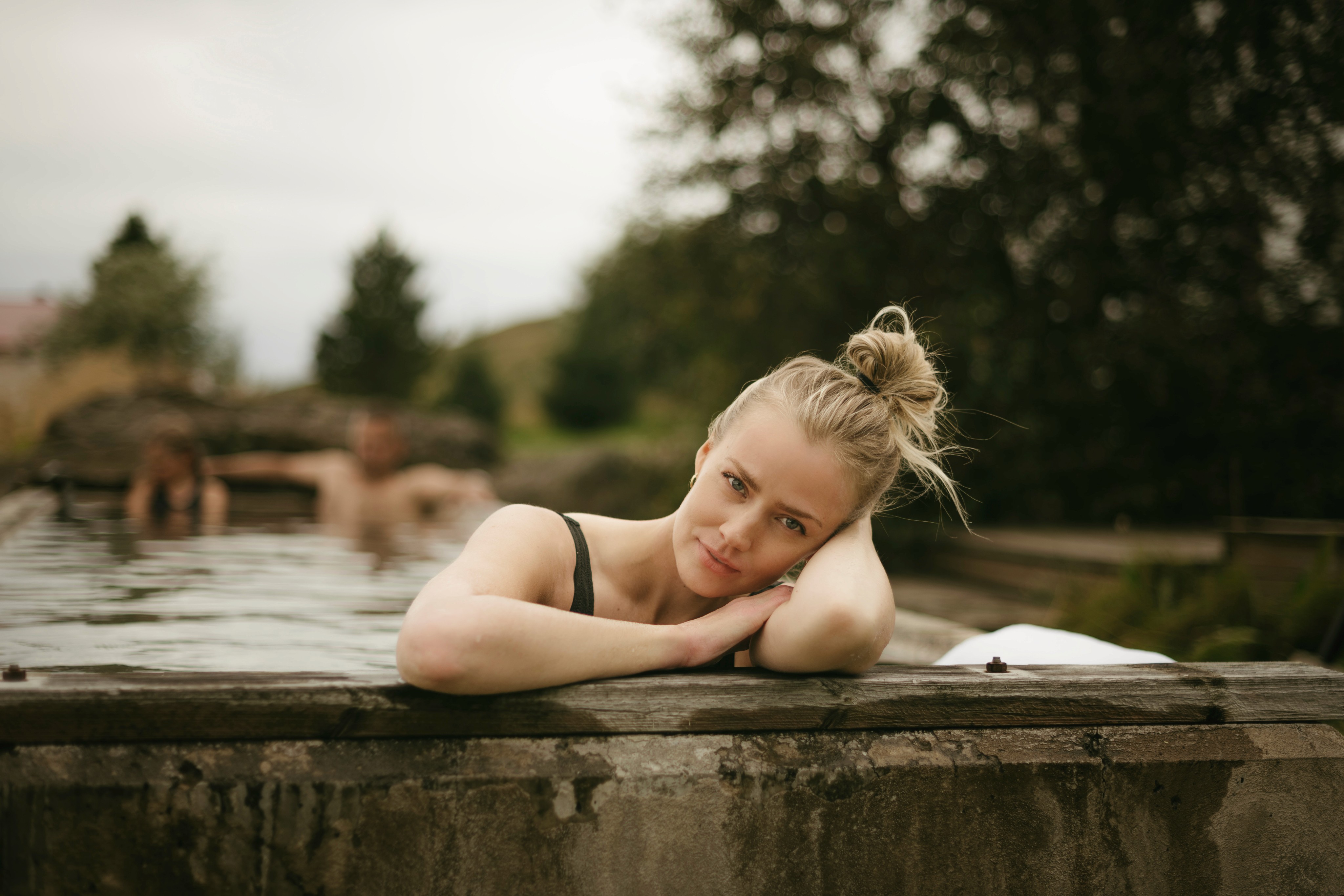
It is a working farm and a boutique hotel, home to one of Iceland's best-known chefs and his family. Evenings end with a two-course dinner cooked over fire at Þorgrímur Restaurant and a soak in natural hot springs reserved for hotel guests, under a sky with no light pollution at all.
That is the north in a sentence: extraordinary nature, an unhurried pace, and the space to actually feel it.
Ready to head north? Explore our rooms or read more about the Diamond Circle.
Next story

Why Bathing Is Woven Into the DNA of Iceland
Ask an Icelander where they go to think, to argue, to celebrate or to recover, and the answer is usually the same: the water. Not the sea — the hot water. Bathing in geothermal springs is not a spa treatment here or a holiday indulgence. It is where life happens, and it has been for as long as there have been Icelanders.
Booking directly with us comes with exclusive VIP perks. Enjoy direct access to our dedicated team of locals to assist you with every step of planning your stay.
Best available rates
A welcome gift on arrival
Personal concierge service
Complimentary laundry service
A guaranteed table at Þorgrímur Restauran
